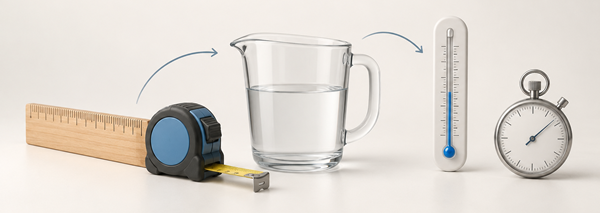
The 24 Hours of Le Mans doesn't mean one driver races nonstop for a full day — it means the clock runs continuously while teams rotate drivers, tyres and strategy through sunset, night and sunrise. Use the converter above for an instant hour-to-day result, or the formula below to work it out by hand.
Hour to Day Conversion Formula
One day contains exactly 24 hours, so one hour is one twenty-fourth of a day:
1 h = 1/24 d ≈ 0.0416666666666667 d
To convert hours to days, divide by 24:
Days = hours ÷ 24
You can also multiply by the approximate decimal factor:
Days ≈ hours × 0.0416666666666667
This relationship follows from the exact time-unit definitions 1 h = 3,600 s and 1 d = 24 h = 86,400 s. These values are documented in the NIST Guide to the SI and the BIPM SI Brochure .
Hours to Days Conversion Table
| Hours (h) | Days (d) |
|---|---|
| 1 h | 0.04166667 d |
| 2 h | 0.08333333 d |
| 3 h | 0.125 d |
| 6 h | 0.25 d |
| 8 h | 0.33333333 d |
| 12 h | 0.5 d |
| 18 h | 0.75 d |
| 24 h | 1 d |
| 30 h | 1.25 d |
| 36 h | 1.5 d |
| 48 h | 2 d |
| 60 h | 2.5 d |
| 72 h | 3 d |
| 96 h | 4 d |
| 120 h | 5 d |
| 168 h | 7 d |
| 240 h | 10 d |
When Endurance Races Run from Hours into Days
Many races end when competitors complete a fixed distance. Timed endurance events use a different structure: the clock is set for six, 12, 24 or 48 hours, and participants aim to cover as much distance as possible before time expires.
These formats provide a clear reason to convert hours to days. A 24‑hour race occupies one full day, a 48‑hour race spans two days, and a six‑day event contains 144 hours.
A Motor Race That Continues for a Complete Day
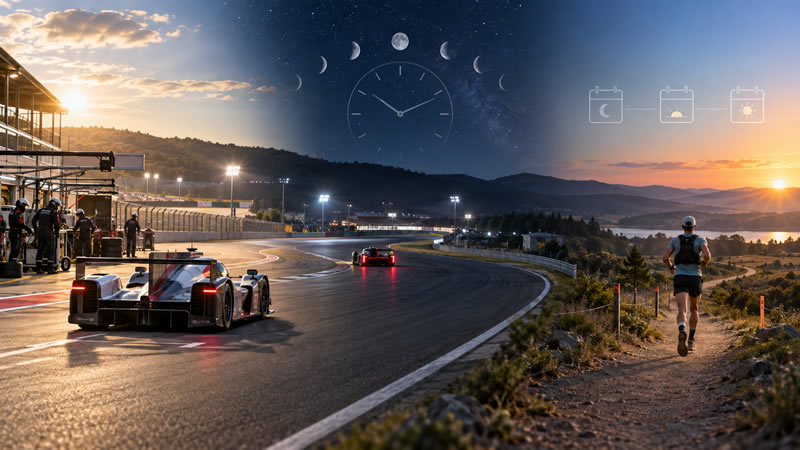
The 24 Hours of Le Mans is a well‑known example of a race governed by time. Cars circulate from one afternoon to the next, passing through sunset, night and sunrise. Success requires speed, reliability and coordinated team strategy rather than a single fast lap.
The official 24 Hours of Le Mans race guide notes that the event has tested cars and drivers since 1923.
Although the car remains in competition, drivers rotate in shifts. Teams also schedule stops for fuel, tyres, inspections and repairs while the main race clock continues.
24 hours ÷ 24 = 1 day
Expressing the event as one day makes its scale easy to understand, but it does not capture the constant activity on the circuit and in the garages.
Ultrarunners May Compete for 48 Hours
Timed ultramarathons follow a similar format. Instead of stopping after a set number of kilometres, participants repeatedly travel around a measured course until the official period ends.
The International Association of Ultrarunners recognises performances for timed formats including six, 12, 24 and 48 hours, and also provides guidance for six‑day competitions.
48 hours ÷ 24 = 2 days
Participants may pause to eat, change clothing or rest, but the race clock normally keeps running. A long break can help recovery while also reducing the remaining time to record additional distance.
Six Days Equal 144 Hours
Some timed running competitions extend across six days. Converting the duration into hours gives:
6 days × 24 = 144 hours
Athletes must balance movement with sleep and recovery. Too little rest can affect pace, judgement and coordination, while a long rest reduces the available competitive time.
There is no universal strategy. Choices depend on the participant, course, weather and event rules. Officials may also intervene if continuing would be unsafe.
Not Every Multi‑Day Race Runs Continuously
A race advertised as lasting several days may be continuous or divided into stages. In a continuous 48‑hour event, the clock generally runs from the official start to the finish, including rest periods.
A stage race divides the route into daily sections. Competitors finish one stage and rest before starting the next. The event may occupy seven calendar days without involving 168 hours of active racing.
Race results may distinguish between:
- Elapsed time — the full period between the official start and finish.
- Stage time — the time counted during competitive sections of a stage race.
- Moving time — the period spent actively travelling rather than resting.
Two competitions described as lasting three days can therefore involve very different amounts of timed activity.
Using an Hours to Days Converter
An hours to days converter divides the number of hours by 24:
Days = hours ÷ 24
| Race duration | Equivalent days |
|---|---|
| 6 hours | 0.25 days |
| 12 hours | 0.5 days |
| 24 hours | 1 day |
| 48 hours | 2 days |
| 72 hours | 3 days |
| 96 hours | 4 days |
| 120 hours | 5 days |
| 144 hours | 6 days |
| 168 hours | 7 days |
| 336 hours | 14 days |
| 672 hours | 28 days |
| 720 hours | 30 days |
The conversion is straightforward. The event behind the number is far more demanding: once a race extends beyond several hours, competitors must manage darkness, fatigue, weather, equipment and recovery alongside speed.