Convert speeds from miles per hour to kilometres per hour for international driving, road-speed comparisons, vehicle specifications, running and cycling.
MPH to km/h Formula
One mile per hour equals exactly 1.609344 kilometres per hour:
1 mph = 1.609344 km/h
To convert mph to km/h, multiply the speed by 1.609344:
Speed in km/h = speed in mph × 1.609344
Example: Convert 60 mph to km/h
Multiply 60 by the conversion factor:
60 mph × 1.609344 = 96.56064 km/h
Therefore, 60 mph is approximately 96.56 km/h.
Conversion-factor reference
The NIST Guide to the SI conversion factors lists the conversion from miles per hour to kilometres per hour as 1.609344. This factor is based on the international mile, which equals exactly 1.609344 kilometres. Because both speed units use the same time period of one hour, the distance conversion supplies the complete speed-conversion factor.
NIST also identifies the kilometre per hour as a commonly used unit for vehicular speed in its guidance on SI-derived units .
mph to Km/h Conversion Table
| Miles per Hour (mph) | Kilometres per Hour (km/h) |
|---|---|
| 5 mph | 8.05 km/h |
| 10 mph | 16.09 km/h |
| 20 mph | 32.19 km/h |
| 30 mph | 48.28 km/h |
| 40 mph | 64.37 km/h |
| 50 mph | 80.47 km/h |
| 55 mph | 88.51 km/h |
| 60 mph | 96.56 km/h |
| 65 mph | 104.61 km/h |
| 70 mph | 112.65 km/h |
| 75 mph | 120.70 km/h |
| 80 mph | 128.75 km/h |
When Canada Changed Its Road Speeds from MPH to KM/H
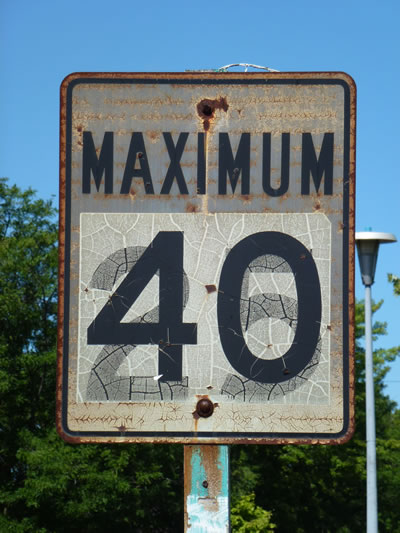
For generations, Canadian motorists understood road speed through miles per hour. A roadside sign displaying 50 meant 50 mph, distances were commonly discussed in miles, and the largest numbers on many vehicle speedometers followed the same system.
That familiar language began to change during Canada’s conversion to the metric system. The federal government introduced its metric-conversion policy in 1970, but metrication was not completed on a single date. Different parts of daily life changed according to separate schedules, giving the public time to become familiar with new measurements.
Weather temperatures changed to Celsius, precipitation began to be reported in millimetres, product measurements were updated and road transport gradually adopted kilometres. One of the most visible stages arrived in September 1977, when Canadian speed limits began appearing in kilometres per hour instead of miles per hour.
This timeline is described in Statistics Canada’s contemporary account of metric conversion .
The Roads Stayed the Same, but the Numbers Changed
For drivers, the new signs created an immediate visual difference. A road that had carried a 50 mph limit could now display 80 km/h. The larger number did not make the road faster:
50 mph × 1.609344 = 80.4672 km/h
Instead of printing the long converted result, road authorities could use a convenient rounded metric value such as 80 km/h. Statistics Canada used this particular comparison when explaining how the transition would work.
Metrication was not simply a matter of replacing every old number with its full mathematical equivalent. Road limits still had to be practical, easy to display and appropriate for local conditions. Rounded metric limits were therefore used rather than awkward signs showing values such as 80.47 km/h.
Common MPH and KM/H Comparisons
The table below shows exact mathematical conversions alongside conveniently rounded values. The rounded column is provided as a comparison and should not be interpreted as a record of the replacement chosen for every Canadian road.
| Miles per hour | Exact conversion | Nearest 10 km/h |
|---|---|---|
| 20 mph | 32.19 km/h | 30 km/h |
| 25 mph | 40.23 km/h | 40 km/h |
| 30 mph | 48.28 km/h | 50 km/h |
| 40 mph | 64.37 km/h | 60 km/h |
| 50 mph | 80.47 km/h | 80 km/h |
| 60 mph | 96.56 km/h | 100 km/h |
One international mile equals exactly 1.609344 kilometres, so the conversion formula is:
km/h = mph × 1.609344
Transport Canada provides the corresponding conversion factors in its measurement conversion tables .
Learning to Read a Different Speed
Metric signs required drivers to develop new associations. Someone who had spent years recognising 30 mph as a familiar urban speed now had to become comfortable with a sign showing approximately 50 km/h. A higher-speed road that previously displayed 60 mph might instead carry a metric limit near 100 km/h.
At first, the larger metric numbers could appear to permit much greater speeds. In reality, the difference came from the size of the units: one kilometre is shorter than one mile, so more kilometres per hour are required to represent the same movement.
Government information campaigns, news coverage and conversion material helped explain the new signs. Drivers could also use approximate comparisons:
- 30 km/h is approximately 19 mph.
- 50 km/h is approximately 31 mph.
- 80 km/h is approximately 50 mph.
- 100 km/h is approximately 62 mph.
As motorists gained experience, these values became meaningful on their own. Drivers no longer needed to translate every 50 km/h sign back into mph before understanding the expected speed.
What Happened to Cars with MPH Speedometers?
Road signs could be replaced more quickly than the country’s existing vehicles. Many cars already on Canadian roads had dashboards designed primarily around mph, so their owners still needed a way to compare the new limits with the instruments in front of them.
Some speedometers already carried a smaller secondary km/h scale. Other drivers used conversion labels, reference cards or aftermarket markings while becoming familiar with the new limits. Newer vehicles increasingly presented km/h as the primary scale.
This difference between infrastructure and vehicle lifespan explains why dual-scale speedometers remained useful. A road sign can be replaced in minutes, but millions of vehicles cannot be replaced merely because the country has changed its preferred measurement system.
Modern digital dashboards make the process easier. Depending on the vehicle, a driver may be able to change the main speed display between km/h and mph through the settings menu.
Metrication Extended Beyond Road Signs
Canada’s speed-limit conversion was part of a much wider programme. Statistics Canada records that temperatures began appearing in Celsius only on 1 April 1975, followed by precipitation in metric units from 1 September 1975. Metrication also affected manufacturing, construction, healthcare, food packaging and other areas of the economy.
The process included a period of “soft conversion,” during which metric and older measurements could appear together. This reduced the disruption caused by asking businesses and the public to adopt many unfamiliar units simultaneously.
Additional background is available in Statistics Canada’s history of Canada’s transition to metric measurement .
Why Dual Units Still Matter in Canada
Kilometres per hour eventually became the ordinary language of Canadian road speed. A driver now understands a 50 km/h or 100 km/h sign without first converting it into miles per hour.
MPH has not become irrelevant, however. Canada shares a long land border with the United States, where speed-limit signs normally use miles per hour. Canadians driving south may need to interpret mph signs, while American visitors entering Canada must adjust to km/h.
Dual-scale and switchable speedometers help both groups. They are not remnants of an incomplete calculation; they are practical tools for vehicles that may operate on both sides of an international measurement boundary.
Canada’s conversion demonstrates how changing a unit affects more than arithmetic. It required revised signs, updated publications, different dashboard displays and a new set of familiar numbers in drivers’ minds. The physical speed did not change, but the language used to communicate it did.